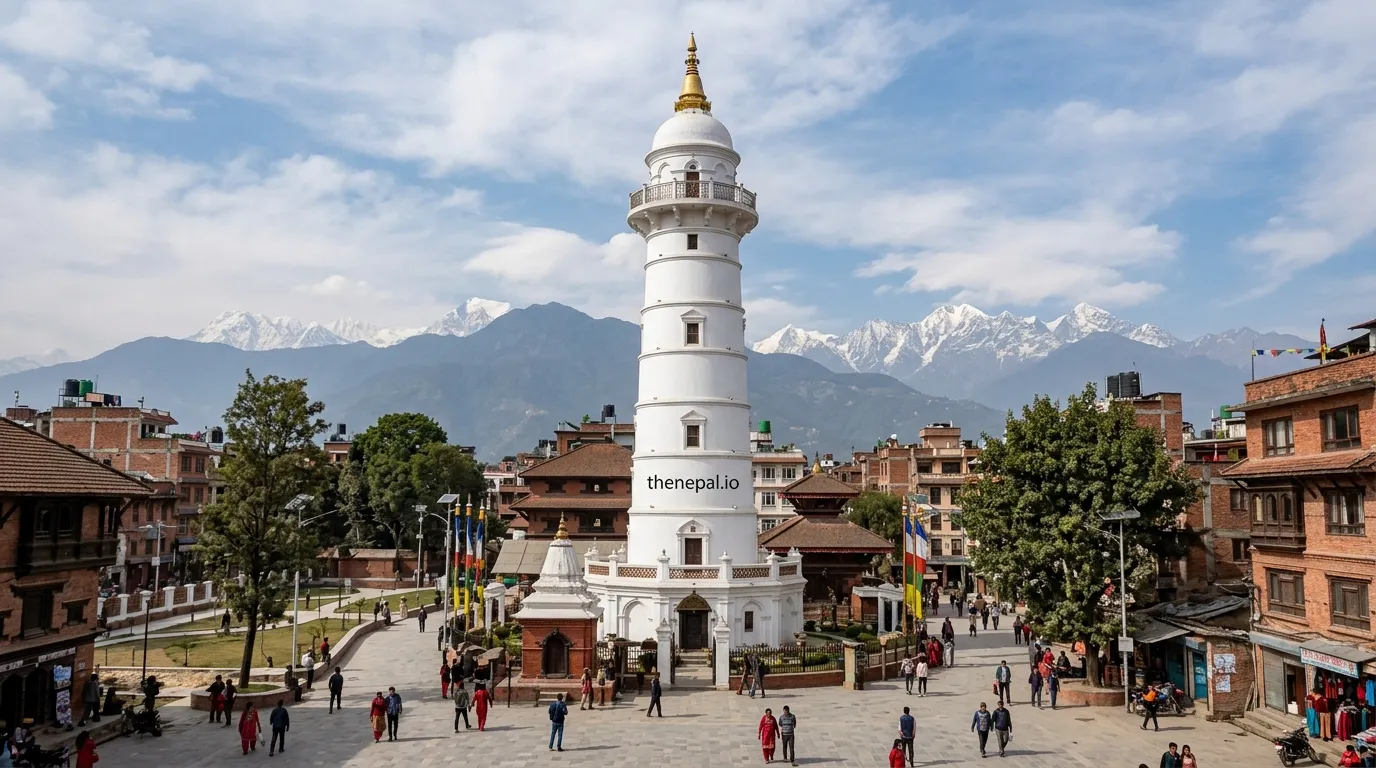
Ask anyone in Kathmandu to point out the city's most famous tower, and they'll gesture toward Dharahara — a slender, nine-storey structure that has watched over the capital, in one form or another, for nearly two centuries. Its story is really two stories: the tower that stood for 183 years, and the tower that rose again after tragedy.
Origins Under Bhimsen Thapa
Dharahara was originally constructed in 1832 on the orders of Bhimsen Thapa, then the powerful prime minister of Nepal, which is why the tower is also widely known as Bhimsen Tower. It was commissioned at the request of Queen Lalit Tripura Sundari and built as a watchtower for the royal palace complex, offering sweeping views across the Kathmandu Valley from its upper platform.
Over the following century and a half, the tower survived multiple earthquakes, including a major one in 1934 that damaged its uppermost section, which was subsequently rebuilt at a slightly reduced height before the structure eventually returned to public use as a popular viewpoint for visitors and locals alike.
The 2015 Earthquake and Reconstruction
Before and after 2015
A 19th-century landmark and viewing platform, open to the public and central to Kathmandu's skyline.
Destroyed in the Gorkha earthquake, then reconstructed at the same site with a museum and viewing deck.
On 25 April 2015, the magnitude 7.8 Gorkha earthquake struck central Nepal, and Dharahara was among its most visible casualties: the tower collapsed entirely, killing dozens of people who were inside or nearby at the time, and the disaster became one of the defining images of the earthquake's toll on Kathmandu's heritage sites.
The Government of Nepal subsequently led a reconstruction project at the same site, rebuilding Dharahara with a similar profile to the original while incorporating modern seismic-resistant engineering, a museum documenting the tower's history and the earthquake, and lift access to the upper viewing platform. The rebuilt tower has since reopened to the public.
Symbolic Significance
Beyond its architectural and historical value, Dharahara has come to represent Kathmandu's resilience — a monument that fell during the country's worst natural disaster in decades and was rebuilt as a statement of recovery. It remains one of the most photographed landmarks in the Kathmandu Valley and a fixture on the city's skyline, alongside other heritage sites in the valley's Durbar Squares.
✦ Did you know?
- Dharahara originally had a twin tower, which was destroyed in the 1934 earthquake and never rebuilt.
- The tower briefly served as a watchtower and later as a communications relay point before becoming a public viewpoint.
- April 25, the date of the 2015 earthquake, is now observed annually in Nepal as Earthquake Safety Day.
Dharahara Timeline
| Year | Event |
|---|---|
| 1832 | Original tower built under Bhimsen Thapa |
| 1834 | Twin tower added nearby |
| 1934 | Major earthquake damages the towers; twin tower lost |
| 2015 | Tower collapses in the Gorkha earthquake |
| 2015–2021 | Reconstruction planned and carried out by the government |
| 2021 | Rebuilt Dharahara reopens to the public |
Source: Government of Nepal earthquake reconstruction records; Kathmandu Metropolitan City
Frequently Asked Questions
What is the national monument of Nepal?
Dharahara, a nine-storey tower in Kathmandu also known as Bhimsen Tower, is widely regarded as a national monument of Nepal and one of the country's most recognisable landmarks.
Who built Dharahara and when?
Dharahara was originally built in 1832 under the orders of Bhimsen Thapa, then prime minister of Nepal, giving the tower its alternate name, Bhimsen Tower.
Did Dharahara collapse in an earthquake?
Yes. The tower that stood until 2015 collapsed during the devastating Gorkha earthquake of April 25, 2015, killing dozens of people who were inside or near it at the time.
Has Dharahara been rebuilt?
Yes. The Government of Nepal reconstructed Dharahara at the same site in Kathmandu, and the rebuilt tower was reopened to the public, now including a museum and viewing platform.
How tall is Dharahara?
The original Dharahara stood roughly 61 metres tall with 213 steps to the top viewing platform, and the reconstructed tower follows a similar height and design.